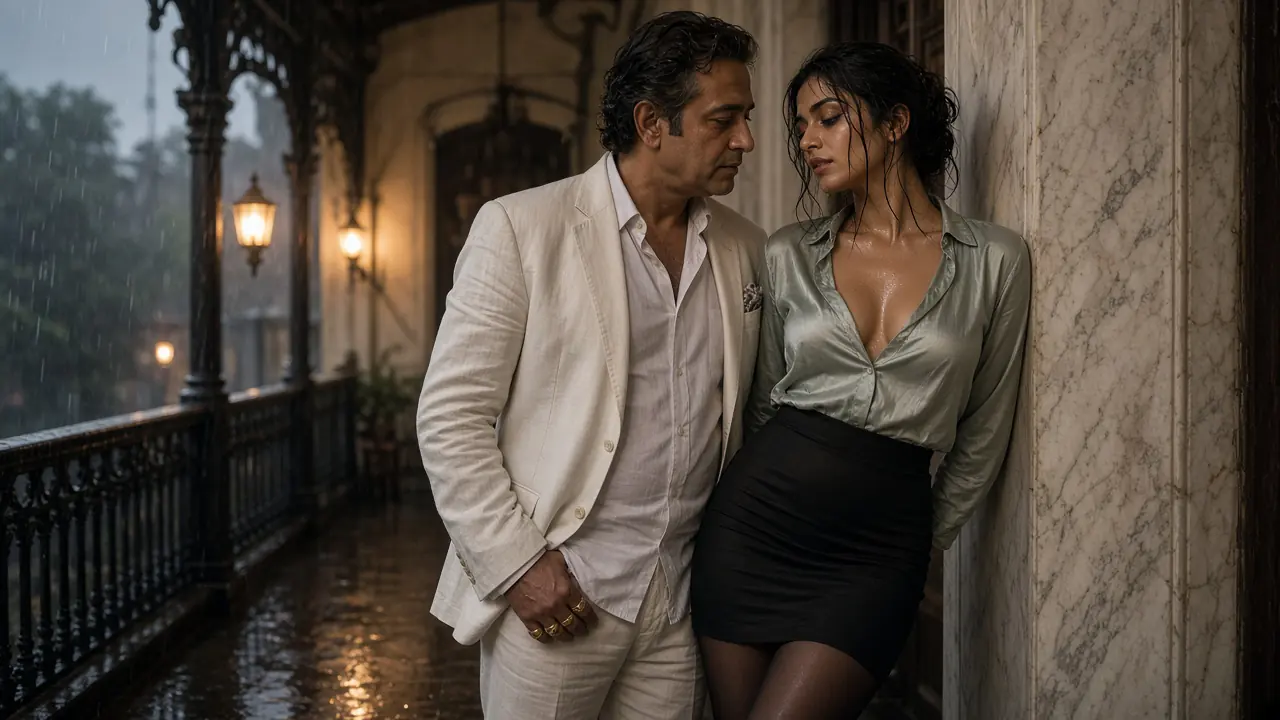
1. 9IPL Story: Opposite Sides of the Old Table
Manoj recognised the small scar on the carrom frame before he saw Pihu. They had made it while carrying the board into the printing shop they once owned together. The shop had closed eleven months earlier. The board had survived, donated to the community hall after neither could bear to decide who should keep it.
Now it stood between their new teams.
Manoj was forty-six. Pihu was thirty-eight. They had once shared a business, a doubles partnership, and the habit of knowing which tea the other would order. They now arrived through different doors and greeted everyone except each other.
His partner Keshav took the opposite seat. Pihu sat with Anju opposite her. The fictional inter-club challenge was a best-of-three-games doubles match, and the official checked the seating and announced the order of play. Each partnership would have to manage its own turns without advice across the board during active play.
Pihu touched the scar in the frame, then withdrew her hand.
“You still leave the hard coin to someone else?” she asked.
Manoj looked at Keshav. He was twenty-nine and had heard enough stories about the old partnership to distrust half of them.
“We will see who has to clear it,” Manoj answered.
The official asked for quiet. Pihu prepared the opening stroke. The room knew there was history between the players. The board offered nine coins of each colour and a queen, with no column in which to enter that history.
Want app links and current offer details? Choose your community below.
TG ChannelWhatsApp ChannelWhatsApp Group
2. The Last Match They Played Together
Their old doubles partnership had ended before the shop's last shutter came down. In a league match they should have won, Manoj missed a difficult opening and left Pihu to recover. She built the position back, then failed to cover the queen when the decisive chance came. The red returned to the centre. Their opponents took control and won.
In front of the team, Manoj said she had thrown away his work.
Pihu stared at him. “Your work?”
He had remembered her final miss and erased the strokes that had made recovery necessary. The argument travelled back to the shop, where tiredness and failing orders already made every decision sharp. Their lease ended, the business closed, and the board went to the hall in a hired van. Neither attended the other's farewell gathering.
Manoj joined Keshav's club. Pihu joined Anju's. Their first months apart were not triumphant. He kept expecting a partner to rescue positions he had left badly. She kept trying to finish every board alone rather than trust a new partner's strengths.
The remaining shop papers stayed in a cardboard box beneath Manoj's bed. Pihu sent one message asking for a day to collect them. He replied that he was busy, then felt injured when she stopped asking.
At the new club, Keshav watched him miss another ambitious cut and asked a question Pihu would once have answered for him: “What position did you intend to leave if that did not go in?”
3. A Partner With His Own Hands
Keshav did not play like Pihu. His striking hand, preferred lines, and pace were different. Manoj kept calling his choices cautious when what he meant was unfamiliar. During their first practice match he took an easy coin that Keshav could have used later, then left a difficult angle and blamed the board.
After play, Keshav reset the position. He asked Manoj to sit in the opposite chair and try the same remaining coin. From there, a clear route appeared. The angle had not been equally difficult from both ends.
They began studying target order before games and reconstructing decisions afterward. During active play they kept their hands and voices to themselves. Each player still had to assess the new position independently when his turn arrived. A partner could preserve an opportunity; he could not promise that two intervening opponents would leave it untouched.
Manoj learned to ask what a shot changed beyond its own success. Did it clear a lane or block one? Did it remove the only easy continuation? If it missed, would it leave the next player an immediate finish?
Keshav learned something too. His preference for safety sometimes kept him from taking a difficult but necessary chance. Manoj made him practise those chances instead of always choosing the least demanding contact.
Their improvement was uneven. They lost a practice evening after both attempted to be generous with the same coin. The following week, they stopped guessing what the other wanted and began trusting what the board actually allowed.
4. Pihu Had Changed Too
Across the hall, Pihu and Anju had built a different partnership. Anju was forty-one, a calm player who refused to let Pihu apologise for every board that did not finish on her turn. In their post-game reviews she pointed to her own missed chances with the same precision she used for Pihu's.
Their first game against Manoj and Keshav showed the result. Pihu attacked when a clear run appeared. Anju slowed down when the remaining coins required a change of angle. Neither tried to prove that she could do the other woman's entire job.
Manoj lost the opening rhythm. He anticipated the bold continuation Pihu used to favour, but she now left a difficult position for Anju when that was the better choice. Anju converted the opportunity. Keshav answered with two clean finishes, yet their pair remained behind.
The women won the first game twenty-five to seventeen.
Pihu rose from her chair and looked at the old scar in the frame. Manoj expected a remark. She asked Anju whether she wanted water instead.
That small turn away angered him more than a taunt. He had imagined the match as a conversation with his former partner. She was playing a doubles contest with her present one.
During the break Keshav handed him the score sheet. “There are four players,” he said.
Manoj read the scores, then looked across at Anju. He had allowed the oldest argument in the room to hide half of the opposing team.
5. Seventeen Points Left on the Sheet
The second game began with Manoj taking responsibility for the difficult coin early. He did not attempt a spectacular pocket. He used controlled contact to bring it away from the cushion, leaving the simpler coin available. The shot did not score, but it improved the position without scattering the rest of the board.
Anju responded intelligently and took two blacks. Keshav then assessed the new arrangement and found a route that had not existed from Manoj's side. His finish brought their pair back into the game.
Pihu tested the old weakness. She left a position in which an immediate attack on the queen would look attractive but demand an awkward cover. Manoj recognised the temptation because he had spent months explaining away the same mistake. He took an ordinary white first and waited for a better queen opportunity.
When the red became practical, Keshav secured it and covered it correctly. The pair built a lead through several boards rather than one improbable sweep. The game closed twenty-five to nineteen in their favour.
One game each.
Manoj signed the game score and left the earlier seventeen visible above it. Pihu glanced at the sheet. He did not tell her that he had learned patience. She had watched the decisions herself.
At the break, Keshav took a long drink and stretched his fingers. Manoj asked whether the chair height was comfortable. It was the first question that evening he had asked his actual partner without mentioning the old one.
6. A Board That Refused Old Ownership
The deciding game began with Pihu at her best. She read a crowded opening quickly and removed three useful coins before the turn passed. Anju continued the pressure. Manoj's pair fell behind, then recovered when Keshav converted a narrow straight route from his own side.
Every useful finish had more than one author. A coin moved clear by one player might be pocketed much later by the partner, after opponents had altered the lanes again. Manoj began to see the board as a changing shared problem rather than a sequence of personal claims.
At a crucial middle board, he missed a white that would have given his pair control. His first impulse was to look at Keshav and offer an explanation. He kept his eyes on the board. The active turn belonged to the opponents now.
Pihu took advantage of the miss but could not complete every remaining shot. When Keshav's turn arrived, he found his own way out. He removed a difficult white, then failed on the next. The recovery was partial and still valuable.
After the board, Manoj said, “My first contact was too thick.”
Keshav nodded. “I rushed the second.”
Two errors, accurately assigned. No one had to carry the other's whole failure. They returned to their seats before the next board was set, with the match still close enough for every controlled stroke to matter.
Keep up with shared activities and app updates through your preferred channel.
TG ChannelWhatsApp ChannelWhatsApp Group
7. Twenty-One to Twenty-Two
The score reached twenty-one to twenty-two, the women one point ahead. A board win could change the match, but the value would depend on the coins remaining and who had secured the queen. The official repeated the totals before the next setup. Both pairs listened.
Manoj's side played white. Pihu's side played black. Early in the board, Keshav potted the queen and covered it on the required continuation with one of their own whites. The red was secured for their side. At twenty-one points, they could still receive its bonus if they won this board.
Pihu responded with a strong sequence. Black coins disappeared from two corners. Anju then reduced their remaining blacks to one. The last black was awkward, but awkward did not mean safe for the other team. One successful finish from either woman would deny Manoj and Keshav the board.
Their own two whites lay in very different positions: one available to Manoj, another difficult from his side but potentially clear from Keshav's. Manoj could feel the old urge to solve the entire board before anyone else touched it.
Across from him, Keshav sat still. He offered no signal. The rules and their preparation required Manoj to make his own choice.
Pihu watched his hand approach the striker. She knew the impatient version of that hand better than anyone in the hall. This time it paused long enough to examine the whole position.
8. The Finish Belonged to Keshav
Manoj pocketed the available white cleanly. One remained. Its present angle from his side invited a forceful attempt with little margin for error. A miss at that speed could clear the last black's route as well as ruin his own.
He chose a controlled contact instead. The white moved into a more open lane, but did not fall. His turn ended. He had improved a possibility, not secured a result. The next opposing player had a real chance to finish the board first.
Anju studied the black for a long time. She chose a rebound route because the direct line remained awkward. The contact was close. The black reached the pocket mouth, touched the edge, and stayed outside.
Keshav's turn arrived with the white still available. Manoj kept his hands below the table. He could see a line from the opposite seat, but it was Keshav who had to judge the exact contact from there.
Keshav checked his legal striking position and aligned the direct cut. Pihu leaned forward. Anju watched the black she had nearly finished. The striker met the white, and the coin travelled across the cleared lane into the pocket.
Keshav sat back only after it fell.
For a second Manoj could not speak. The final stroke was not his, and the victory entering his chest felt no smaller. He looked across at his partner and let the whole room see whom he was looking at.
9. Four Points and Two Hands
One opposing black remained. Manoj and Keshav had won the board and had already secured the queen. From their starting score of twenty-one, the one remaining-coin point and three queen points took them to twenty-five.
The deciding game ended twenty-five to twenty-two. Their pair had won the match two games to one: seventeen to twenty-five, twenty-five to nineteen, twenty-five to twenty-two.
Keshav stood first. Manoj caught his hand, then raised it between them. When the announcer turned toward Manoj for a winner's remark, he directed the microphone across.
“He made the last stroke,” he said. “Ask him what he saw.”
Keshav explained the line without pretending that the preceding positional stroke had been irrelevant. He named it, then described his own adjustment. Credit moved across the board in both directions without diminishing either player.
Pihu listened. Her face was closed with disappointment, but when she shook Manoj's hand she did not pull away immediately.
“You used to hate leaving that kind of finish,” she said.
“I used to hate admitting someone else saw it better.”
Anju joined them and described how close the black had come. Keshav asked to reset it later. Four players stood around the old board, discussing four sets of decisions. For the first time since the shop closed, Manoj heard Pihu laugh at something that was not meant to wound him.
10. The Box Beneath the Bed
They reconstructed the last board after the hall had quietened. Anju found a slightly different contact for her rebound attempt. Keshav missed his winning cut on the first replay and made it on the second. The review gave the finish its proper difficulty. Nobody had been handed a simple ending.
While the others packed the coins, Manoj told Pihu he still had the shop's remaining records. He asked whether Saturday morning would suit her. She said ten o'clock, outside the old shutters. Then she asked him to bring the keys that belonged with the file box.
On Saturday he arrived at nine-fifty with everything arranged in one carton. Pihu checked the folders, found the missing key, and closed the lid. They spoke briefly about the people who had helped carry the board out. It was the first practical conversation they had completed without restarting the failed business inside it.
Before leaving, she told him that Anju wanted another doubles match next month.
“I will ask Keshav,” he said.
Pihu nodded at the answer. The partnership beside him was no longer an afterthought.
At evening practice, Keshav had already set up the difficult final white. Manoj took the opposite chair. He looked at the old scar on the frame, then at the angle in front of his partner.
“This time,” he said before play began, “show me the version you missed.”
Keshav grinned and reset the coin.
Ready to explore? Open a channel for app information and the terms of shared offers.
TG ChannelWhatsApp ChannelWhatsApp Group